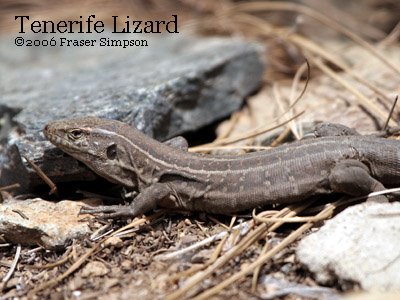
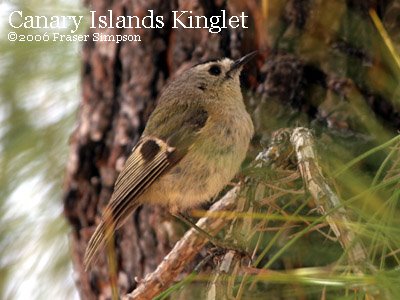
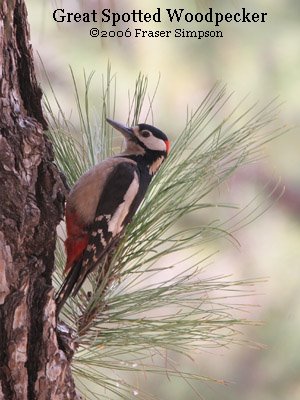
Even the more recognisable birds here are identifiable to some degree as distinct sub-species or island races. The Common Chaffinch really is quite different to birds on the European continent. The Tenerife Robin is a bit more cryptic morphologically but its vocalisation is fairly distinct. The cabrerae race of Blackbird, however, looks pretty much like the garden bird in the British Isles. Other recognised subspecies found through the week included koenigi Southern Grey Shrike, canariensis Great Spotted Woodpecker, canariensis Grey Wagtail, atlantis Yellow-legged Gull, and the canariensis Kestrel, These islands could be described as the Galapagos of Europe and its not just the birds that are fascinating…from the lizards (just two endemic species) to the plants (hundreds of endemics) there is much to keep up the interest when the birding starts to run thin. However, if I’d known how easy it was to see all the special birds within a few days I would have planned the rest of the week around a trip to Fuerteventura to pick up the Fuerteventura Chat, Houbara Bustard and Cream-coloured Courser. There is always next time...





8 comments:
Cool pictures!
Having lived in Tenerife 10 years in the south of the islands, it is amazing how many more birds are seen in this area, when I first came here blackbirds, wagtails, pipits and chiffchaffs were species you only saw when you went up to the north.
In my small garden daily visits of the chiffchaff and the other morning the first Canary. Plenty of green parrots and blackbirds.
Great photographs. I have recently returned from South Tenerife and have been facinated by the sound of a bird that appears to fly at night only, the locals refer to it as the Canarian Bird. Do you know what this is and have you any pictures?
Very helpful..thanks
Great blog, thanks!
I have also heard the bird that appears to fly only at night. In fact I hear it every night and has a very unusual sound. Canarian Bird I believe it is called. Please post a picture and a little information. Would like to know where it nests.They seem to be quite happy here in Taurito, Gran Canaries
I was in Tenerife on holydays for two weeks last month and I also witnessed that bird with the unusual sound... to me it almost sounded like a mocking child, really fascinating.
At first I thought it was some kind of gull, because it seemed to be of medium size and looked white-ish... but then again, the always flew pretty fast and it was dark. ;)
I'd love to know more about this bird!
Oh, about the bird I asked about before... I just found it out. It's a Cagarro (Cory's Shearwater)!
Maybe this is the one the others have been searching for as well?
It can be heard here:
http://www.youtube.com/watch?v=4ZcgZAAe1hk
Post a Comment