bi bo binocul

Fraser's Birding Blog

Wednesday, July 08, 2009

North-east Poland

The blog has been quiet this last month, mainly as I have been out in the field a lot. Mid-June I had my annual field course at Kindrogan in Perthshire and I’ve just returned from a trip to Poland. More on both these trips later.

Firstly here are a few photos from north-east Poland where I was camping in the Bialowieza Forest and Biebrza Marshes, birding, sound recording and chasing butterflies and dragonflies. It was a magical experience waking up to yodelling Golden Orioles every morning, stumbling though ancient forests of cathedral-like proportions, finding seven woodpecker species and surprising a Pygmy Owl. Dusk forays produced rasping Corncrakes and reeling River Warblers but the everyday birds were just as impressive with Red-backed Shrikes everywhere, and White Storks and Black Redstarts in every village. Fields full of wild flowers were heaving with butterflies, particularly fritillaries. Later in the Biebrza Marshes, a huge wetland but with little visible water, Aquatic Warblers were my main quarry but Great Snipe was sadly missed. It was hot and humid with temperatures up to 31C and after several hours in the forest dodging mosquitoes and in need of food, I started to think I was back in the tropics. An impressive meteorological feature most days were the towering cumulus clouds building in the late afternoon, cumulating in sometimes impressive thunder and lightning storms. These, and their preceding strong winds, often cleared with an hour or two as cooler, more pleasant evening was ushered in. I caught up with one of my favourite species again, the Eurasian Crane, and their evocative bugling sounds was a feature around much of Biebrza National Park.

A full trip report will appear here within a few days:
www.fssbirding.org.uk/poland2009trip.htm

Bugs'n'beasties names..
Eurasian Pygmy Owl Glaucidium passerinum
Elk Alces alces
Broad-bodied Chaser Libellula depressa
Club-tailed Dragonfly Gomphus vulgatissimus
Scarce Chaser Libellula fulva
Scarce Copper Lycaena virgaureae
Pearly Heath Coenonympha arcania
Heath Fritillary Mellicta athalina
Lesser Marbled Fritillary Brenthis ino

Wednesday, June 10, 2009

Stone the Bob Crows

As London Underground (a Victorian-era train service with fares at 21st century prices) decided to put its feet up for two days (see here), the daily commute to work was going to be problematic. The only other obvious choice was the bus but as the rest of London would be doing the same, I decided to walk the 8 or 9 nine miles. I had often thought about doing this walk on a nice early summer morning, taking in a few birding sites on the way. This morning was overcast and ended in rain. Still I saw 50 species on a route which took me from not so Sunny Hill Park to Hampstead Heath (not a heath either) and through Regent's Park into Central London. Highlights included Green Woodpecker and House Sparrow in Hendon followed by Nuthatch, Jay, Treecreeper and Common Tern on Hampstead Heath, ending with Reed Warbler and Great Crested Grebe just off Baker Street. I walked the route at a fair pace and didn't really stop to look around, particularly on the Heath where the bushes may have hidden an MP fiddling with his expenses. About to leave Regent's Park on 49, and round numbers are always nice, I looked around for an obvious choice to make it up - Mute Swan. Some birds can be difficult when you are actually looking for them... but then I saw one gliding past the rubber Smew and plastic Garganey. After all this, I arrived at work to find out that Northern Line had been (mostly) running all along. Apparently it's staff belong to a completely different union. That's very good of them not to join the strike but why no information or notices telling us this in advance?

The Viaduct Pond on Hampstead Heath

Sunday, May 31, 2009

Knockentiber to Springside disused railway line

I cycled along the disused railway line between Kilmarnock, Knockentiber and Springside at 0540h this morning to survey some farmland birds, finding: Yellowhammer (19 singing mm), Reed Bunting (3 mm), Whitethroat (9 mm), Sedge Warbler (7 mm), Blackcap (1 m), Willow Warbler (34 mm), Skylark (8 mm), Song Thrush (8 mm), Goldfinch (7 mm), Linnet (2 prs), Chaffinch (10 mm), Blackbird (10 mm), Wren (24 mm), Robin (7 mm), Dunnock (7 mm), Lapwing (2 territorial prs), Curlew (territorial bird), Grey Partridge (heard only). Plenty of hole nesting species in the beeches including 3 pairs of Tree Sparrow (minimum count from path only), Stock Dove, Jackdaw, Kestrel, Great Tit and Starling. Nesting Sand Martins also zipping along Garrier Burn

Painted Ladies were active from 0704h at least and before it was time for heading back for breakfast, 32 had been counted along with 12 Orange-tips plus the other three pierids. In Kilmarnock, Painted Ladies were heading NW at a rate of 2/min around midday but on the coast between Troon and Irvine, no obvious movement was detected. Gailes Marsh had 7 and a 1.5 km stretch south from Irvine harbour mouth produced just 15.


In the sonograms above: (1) Willow Warbler - territorial song verse (it makes a a nice looking spectrograph pattern, eh?); (2) Tree Sparrow - vocalisations uttered while perched close to the nest hole; (3) Yellowhammer - territorial song verse. A neighbouring bird consistently sang without the terminal 'cheese' phrase. Another neighbour switched between a high-pitched 'cheese' ending and a low-pitched ending, one after the other at almost a 50:50 ratio; (4) Sedge Warbler - section of a much longer delivery of territorial song from a bird low in hawthorn scrub.

Saturday, May 30, 2009

Painted Lady invasion hits Ayrshire

Incredible numbers of Painted Ladies along the south coast this afternoon - easily surpassing the county's biggest previous invasion in 1996. We stopped counting at 702! In contrast to London earlier this week when most butterflies were urgently flying north without stopping, most of today's individuals were resting and feeding on almost every available nectar source (particularly Brassicaceae, Asteraceae and Trifolium spp.) but a northward movement was still apparent in the fairly strong SE wind. Some numbers: 199 along a 500m stretch from Pinbain Burn south; 234 between Bennane Lea & Port Vad; 209 along a 500m stretch from Ballantrae Pier south; only (!) 36 at Currarie Port. Also noted from the car in every 1km home to Kilmarnock. At a rough estimate, assuming an even distribution of numbers and uniform habitat, there could have been at least 50000 along the Ayrshire coast today. Other highlights: Dingy Skipper & 21 Wall at Pinbain; 48 Wall at Bennane Lea-Port Vad; 8 Wall at Currarie, and large numbers of Silver-Y everywhere. Nine other spp inc Large Skipper, Small Heath & Small Copper.


Monday, May 25, 2009

Ythan Estuary and the Sands of Forvie

Bank holiday weekend and a chance to escape from the madness of London… I took the 12 hour bus up to visit Lisa in Aberdeen. Wakening just before Glasgow, I decided to do a bit of birding from the bus for the remaining three hours. Nothing too exciting was glimpsed through the glass but in addition to some Common Seals, and Red and Roe Deer, the following were noted: Herring Gull, Lesser Black-backed Gull, Feral Pigeon, Mistle Thrush, Chaffinch, Kestrel, Carrion Crow, Wood Pigeon, Starling, Jackdaw, Blackbird, Rook, Stock Dove, Magpie, Song Thrush, Lapwing, Curlew, Common Gull, Goosander, Swallow, Buzzard, Oystercatcher, Black-headed Gull, Mute Swan, Collared Dove, House Martin, Goldfinch, Mallard, House Sparrow, Long-tailed Tit, Greylag, Pheasant, Greenfinch, Tufted Duck, and Sand Martin.

The following day we visited the Northern Sahara! Well, not quite but the Sands of Forvie NNR on the Ythan estuary is the most spectacular glacial dune system in the British Isles. Only 30 minutes on the bus north of Aberdeen, the area has the largest breeding concentration of Northern Eider in Britain which nest over a large area of protected coastal moorland. There are large numbers of breeding Shelduck and a large, though sadly diminishing Ternery (Little, Common, Arctic and Sandwich). Luckily the weather was favourable and by lunchtime all these white-plumaged birds were gleaming in the Mediterranean-like light!


While the news came in that southern England was about to sink under the huge number of Painted Ladies arriving, we were experiencing our own mini-plague in the north - not adult butterflies, but masses of larve of Garden Tiger and Six-spot Burnet moths! At first we saw a few hopelessly blowing across the dunes in the strong wind, somehow having lost their grip of their dune-side foodplants. Now I’m no bunny hugger (all too happy for escapee Eagle Owls to clear up the cats and small dogs) but after carefully placing the first few back in the marram grass, we soon realised this was completely futile due to the sheer numbers involved. Still, easy picking for birds that like the hairy tiger moth larvae and so it was strange that not a single Cuckoo was seen or heard on the moor, particularly in view of the number of host Meadow Pipits displaying.

We walked around 10 miles of this extensive area visiting (photos below) the remains of Forvie Kirk, Hackley Bay, Sand Loch, Cotehill Loch and the upper reaches of the Ythan and around 60 species were noted including Razorbill, Gannet, Red-throated Diver, Rock Pipit, Whimbrel, Kittwake, Fulmar and Sanderling.

On the Monday we took another bus to Blackdog for the Surf Scoter which we managed to dip, not for want of trying but due to sheer lack of optical power. My field scope was still in Ayrshire and it became clear on arrival that the flock of around 500 Common Scoters were just too far offshore to be adequately searched through using just binoculars. Later back on High Street in Old Aberdeen, we at least ticked the memorial plaque to Scottish ornithologist, William Macgillivray. Then it was back on the overnight coach from the wild North and back to the grime.

Thursday, May 21, 2009

Albinistic Blackbird in full song

Walking home from work last night about 1940h I turned on to my street and there was the elusive white Blackbird singing in full song, in full view on top of a television aerial and just metres from one of the song posts of a regular blackbird: it was nowhere to be seen. Ten minutes I was back there with my camera and sound recording equipment but it was gone. The albinistic individual had been seen off by dominant territory holder. Still, the walk back produced some excellent views of the Swifts entering and leaving their nest sites.

Sunday, May 17, 2009

Vía de Tarifa

When will the spring weather return? The weekend was too cloudy for bird photography and too windy for sound recording. Still, it meant I had no excuse for avoiding desk work: compiling the Ayrshire Bird Report, writing up trip reports (and planning the next one!), and assembling an article. Here is my trip report for a recent undergrad field trip (ecological genetics) to south-western Spain... not proper birding, more species noted along the way.


Managed to capture the high-pitched, metallic calls of a Hawfinch (one of a party of three or four) which landed right above my head while I was quietly sitting in wood.


An Egyptian Vulture over the Sierra de la Plata...

Wednesday, May 13, 2009

Albinistic Blackbird in subsong

Walking to work this morning I heard some quiet, subdued subsong, just audible within a couple of metres of a pavement-side holly bush. Now I've never heard birds at this stage of their song development in May before but maybe the source of this subsong had something to do with it. Concealed in the holly was a red-eyed albinistic male Blackbird, its position right in the middle of two adjacent Blackbird territories. I walk this street at least twice a day and have never seen this individual before but clearly it has failed to acquire or maintain a territory. More observation is needed to determine if it has developed full song. It's strategy of keeping a low profile is probably a wise choice; singing from a prominent perch and it will be a likely target from rival male Blackbirds and possibly the local Sparrowhawks too!

Monday, May 11, 2009

Reservoir blogs - Walthamstow

Yesterday I visited Walthamstow Reservoirs in London (Canary Wharf towers just visible in the photo below) for more sound recording. Of most interest was a male Cuckoo uttering the familiar sound of spring. At the end of one bout of singing, a female gave the less often heard rippling or bubbling call (see first sonogram below) and the male immediately flew off in pursuit of it as it flew across one of the large water-filled basins to a wooded island. There are a number of possible hosts in this area though Reed Warbler or Dunnock could be the most likely. Also below are sonograms showing the trilling territorial voice of the Little Grebe (a chattering Reed Warbler also present on the recording) and some high-pitched social screams from a Swift.

Reservoir blogs - Brent

Last Saturday I was at Brent Reservoir (also known as The Welsh Harp) in North London listening to warblers and attempting to get some sound recordings. A Reed Warbler in more marginal habitat was singing from a hawthorn some distance from its neighbours in the Phragmites/Typha mix. Its song contained much more mimicry including Common Tern. Below is a sonogram of part of Garden Warbler's song. Visit the 'official' Brent Reservoir website at:
www.brentres.com

Larger versions here: www.fssbirding.org.uk/sonagrams.htm

Tuesday, May 05, 2009

The sounds of Totteridge Valley

Bank Holiday Monday yesterday so I walked into the nearest piece of 'countryside' that north London has to offer; Totteridge Valley and Darlands Lake. Anywhere around London can just be too noisy for sound recording (planes overhead every minute) but this area is good for warblers and I was interested in getting some recordings of Lesser Whitethroat vocalisations. A couple of territories were visited where the males were busy singing but no calls were heard and no females detected. The first sonogram below shows the typical song with introductory fast twitter/warble followed by the longer, dry rattle. The second is from a bird which on most occasions dropped the twitter and uttered just a longer rattling phrase. The third sonogram shows a more unusual song, one that I've not heard before. This is an extended (11 seconds), ecstatic Whitethroat/Blackcap-like warble which I recorded from a bird at a range of two metres along a pathway between two dense 2.5 to 3.0m high blackthorn (Prunus spinosa) hedgerows. It was completely unaware of my presence.

A nearby singing Song Thrush was incorporating a lot of mimicry into its repertoire. Below are a couple of the more interesting species; the 'ke-wick' call of a female Tawny Owl and the 'laughing yaffle' of a Green Woodpecker.

Reel 2 Reel

Took the train up into the Lee Valley on Saturday for the Savi's Warbler at Seventy Acres Lake - only the fourth ever for the London recording area. Sleeping in (!) and the two hour journey meant I didn't arrive until mid-morning by which time it had gone quiet. This warbler has a strange cricket-like song so I decided to make a sound recording, knowing that a photograph was out the question considering its location out in the reedbed - about 80 metres from the footpath. It briefly sang around 1130h but the output from many other species including Nightingale, Whitethroat, Reed Warbler, Garden Warbler and Cetti's Warbler was still high and it was difficult to hear. I explored the rest of River Lee Country Park throughout the day, planning to return in the evening for another chance. Found around 70 species including Hobby (8+) and Marsh Harrier (imm female) and a few dragonflies including Hairy Dragonfly. Ten warbler species later I joined an assembled crowd of around 50 already listening to an evening performance of the reeler. A sound recording was a bit of a long shot but my new Sennheiser microphone managed to pick it up - ok, not a quality recording at 100 metres range, but enough to ID it on a sonogram. Continuous phrases or strophes were much shorter than the more familiar Grasshopper Warbler, typically less than 30 seconds - see the comparison below with a Gropper I recorded in Scotland a few years ago.

Larger versions here: www.fssbirding.org.uk/sonagrams.htm

Sunday, April 26, 2009

Mola mola

Just back from 10 days on the Costa de la Luz on my sixth field course to Zahara de los Atunes. The first four or five days were cooler than back home but by the end of last week temperatures were peaking at 27°C and there was even a day without any wind! On our day off a few of us set sail into the Straits of Gibraltar with Whale Watch/FIRMM to observe Common, Striped, and Bottlenose Dolphins and good numbers of Pilot Whales. Bird-wise it was very quiet with Arctic Skua and Gannet the only notable species but the real highlight for me was the Sunfish that cruised past the boat all too quickly!

Aside from the usual study organisms (beetles, snails, pond skaters and plants) there was of course time to get away and look for birds and take a few photographs. The fields and scrub around Zahara are populated by many Corn Buntings, Zitting Cisticolas and Nightingales and the town itself has Spotless Starling, Crested Lark, Sardinian Warbler and passing Audouin’s Gulls and Kentish Plover on the beach. Many species can also be observed on migration overhead.

Highlights this year included a male Blue Rock Thrush which sang from the Castello de la Almadrabas in Zahara every morning. This ruined castle in the former stronghold of tuna fishing lies just beyond the sandy beach in a flat coastal strip some distance from the nearby Sierra del Retín and this the first time I have observed this species in atypical habitat. Woodland on the sierra provided Orphean Warbler and Hawfinch among the many Woodchat Shrikes, Hoopoes, Serins and Blackcaps and in the Valle do Ojén birdsong from abundant Nightingales mixed with Iberian Chiffchaff, Firecrest, Subalpine Warbler, Bonelli’s Warbler and Short-toed Treecreeper. La Janda was poor this time but Purple Swamphen and Great Reed Warbler kept up the interest on two drives through this former wetland. Another wetland also worth a regular check is the Marismas de Barbate and Caspian Tern, Gull-billed Tern, Slender-billed Gull, Tawny Pipit and Short-toed Lark were some of the highlights there.

Colonial Lesser Kestrel and Red-rumped Swallow were observed at Vejer de la Frontera and Tarifa. One evening after sunset, a stream of Painted Lady butterflies was still arriving over the Strait from North Africa. Other migrants were common on the coast on some days with Redstart, Whinchat and Northern Wheatear. Griffon Vultures were a daily feature but other raptors included Egyptian Vulture on the Sierra de la Plata, Montagu’s Harrier near Zahara. Black Kites at La Janda, Short-toed Eagle in several areas and a few migrant Booted Eagles and Honey Buzzards on the coast. Other birds of note included Collared Pratincoles near Conil, a Purple Heron in the estuary at Zahara, Wood Sandpiper at La Janda and Bee-eaters at several sites.

On the final day as I was driving out of Zahara a flock of 83 Spoonbills migrating northeast against a deep blue sky backdrop was a fantastic sight!

All of the images below are available as prints.
Larger web versions with labels/names available here:
http://www.facebook.com/album.php?aid=2168165&id=202905271&l=01d4c3f34f


Tuesday, April 14, 2009

View from a Crane Hide

video

Here is a snippet of film showing the view from the photo hides at Hornborgasjön (taken with my wee Canon A640).

While I'm still on the subject of Cranes here is the birthday cake Lisa made me last month. I didn't eat it all myself!

Saturday, April 11, 2009

Cranes in Sweden - the photos

I have now uploaded around 50 largers photos of the Eurasian Cranes from Sweden at the end of March. Please follow the links below. I'm still working on the trip report.


Tuesday, April 07, 2009

Larger crane photos

The first of last week's Crane photographs at larger size are now on my main website - click the link below . Hopefully have two more pages on before the end of the week.

www.frasersimpson-birdphotography.com/crane5.htm

Wednesday, April 01, 2009

Messengers of Spring (in the snow)

Here are the first few images from a successful trip to Horborgasjön. I had two very different days in the photo hides; the first being extremely cold but with lots of good light and second being mainly cloudy but with a morning of snow!There was lots of crane dancing but this is actually quite difficult to capture effectively with so many birds present. By the time I left on Monday, 18500 Eurasian Cranes had arrived! This is the largest number counted so far, surpassing even last year's peak of 15300. I have to say that for me this spectacle is even greater than the massive flocks of Scotland's winter geese. Within three weeks they will all have departed for a more solitary few months as pairs disperse to breed alone over Scandinavia. Check out the excellent website for Lake Hornborga: www.hornborga.com
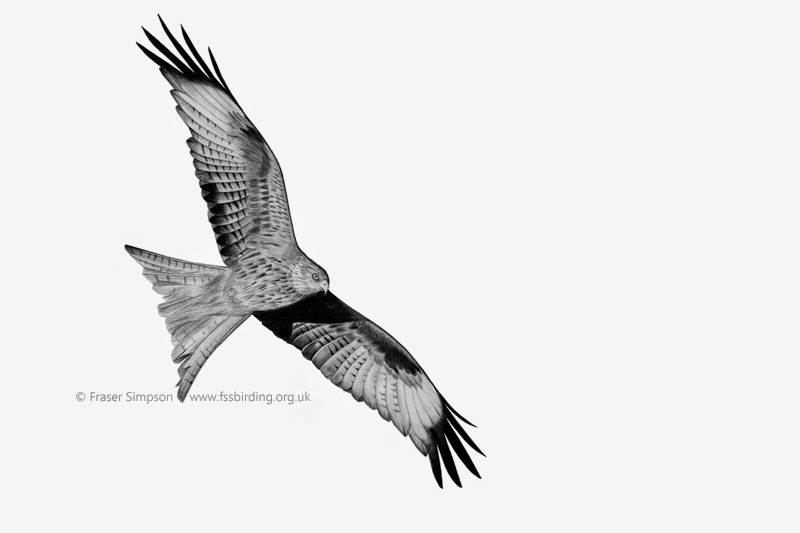
More photos (with larger versions) and a trip report to follow on the main websites.

Monday, March 23, 2009

Trandansen at Hornborgasjön

I'm looking forward to returning to Hornborgasjön in Sweden later this week. Lake Hornborga is the staging site in Sweden for almost the entire population of Eurasian Cranes in Scandinavia. In 2008 the peak day count during the spring passage was 15300! I've hired a photography hide for two days/nights so I'm hoping the light is good and nocturnal temperatures get above freezing! Last year I was a bit late for the dancing displays so hopefully I've time it right.

This year web cameras have been installed at the main visitor centre and give a good impression of the area. In web cam 4 you can just make out one of the photography hides in the distance to the left. The hides are accessed after dark after the cranes have flown to a roost site on the main lake. You have to sleep overnight in the hide as the birds start returning in the hour before dawn. There are currently at least 3400 present - spring passage has started early again this year - and more cranes can be viewed arriving (live) from the south.
See:http://www.webbkameror.se/djurkameror/hornborgasjon/hornborgasjon_4_640.php

Sunday, March 22, 2009

Blackbird song

Blackbirds are my favourite songbirds when it comes to listening to birds. Yes, Nightingales are impressive but they lack the composure and serene delivery of the Blackbird. Of course this is a purely human way of sensing this aural signal and it is interpreted in a very different way by the birds themselves, particularly neighbouring males in competition for territory and potential mates. I made some recordings this evening of a Blackbird singing at dusk in Sunny Hill Park, London, c10 metre up in a tree top. This has been its favoured song post for some weeks now. This individual averaged around 9 phrases/minute each lasting 1.5-2.5 seconds with a 5 second pause between each as illustrated in the figure below. The second figure illustrates some of the unique phrases in a varied repertoire from the same individual. Each phrase consists of slow frequency modulated pure tones between 1.5 and 3.0 kHz, often followed by a more complex and higher-pitched flourish.

Larger versions can be viewed here: www.fssbirding.org.uk/blackbirdsonogram.htm

Saturday, March 21, 2009

Punks

Finally managed to get some pleasing images of heron nestlings this year. There was a lot of waiting around with often a 1-2 hour period between feeds. When the adults did return the scramble around the regurgitating parent was over in a few seconds.

This pair is well advanced but others are just finishing off the nest and getting ready for egg-laying.


Larger versions here: www.frasersimpson-birdphotography.com