Monday, May 15, 2006

Golden Oriole...for some

This weekend I missed a Golden Oriole not far from my place of work in London - only 10 minutes away by underground, followed by a slightly longer walk. The news came in on Friday through the London Birders yahoo group and BirdGuides (see also the Stoke Newington Birds blog) but of course I had to wait until the evening before seeing it – or not, as was the case. The bird had been elusive in oaks around Stoke Newington Reservoirs and didn’t want to show for the latecomers.

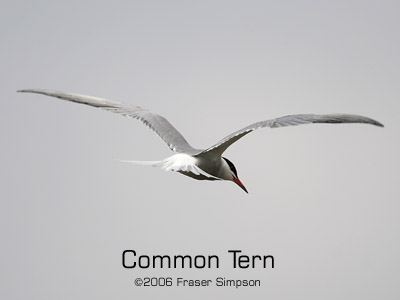
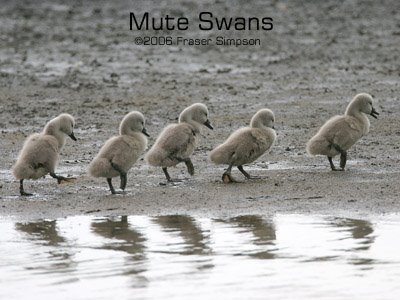
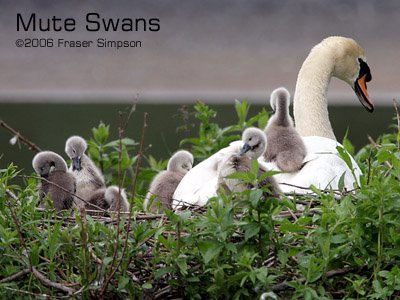
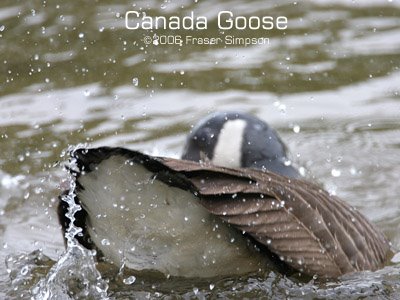
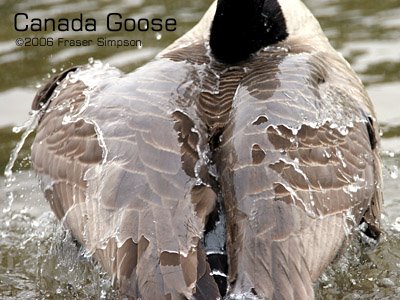
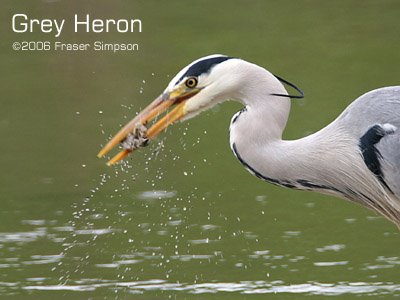
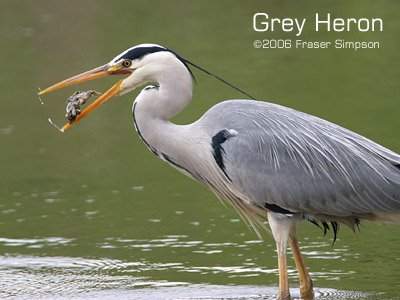
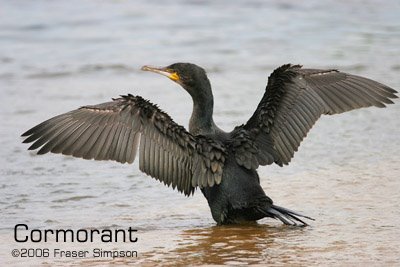
Most of Saturday was spent at the computer working on the final stages of the Ayrshire Bird Report 2005. On Sunday, I spent several hours photographing large and easy birds at Walthamstow Reservoirs. There are many fledgling Grey Herons around including one with a deformed beak. At times, when it was feeling especially sorry for itself, it kept hidden in dense, bankside vegetation until a fox surprised it. The heron launched itself into the water in a life-saving bid and the Canada Geese and Mute Swan family joined in the collective mobbing which saw the fox make a hasty retreat. See – Canada Geese are good for something! Also around were Lesser Whitethroat, Hobby, Common Tern, Shelduck and Common Sandpiper. Below is a small selection of photographs.
Tuesday, May 09, 2006

Titchwell RSPB Nature Reserve

Leaving work on Friday, a check on BirdGuides revealed a report of a Hoopoe back in my home town of Kilmarnock in Ayrshire. Nobody would seriously consider traveling 400 miles for a Hoopoe in the British Isles – they are not that rare after all. But what about one a stones throw away from a former local patch? Still a bit silly, and a needless, extra burden on the environment, but tempting nonetheless. In any case, it was never seen again. This overshooting drift migrant was probably grounded by that crazy thunderstorm a few nights ago and was glad to leave its temporary home of Kilmarnock Cemetery when the fine weather returned. The Hoopoe is probably my favourite bird and one nearby at, my other former local patch, Northcraig Reservoir on 9-10 May 1999 must rank as the best.

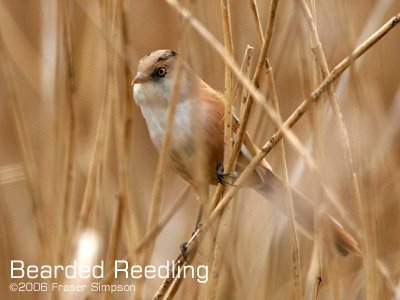
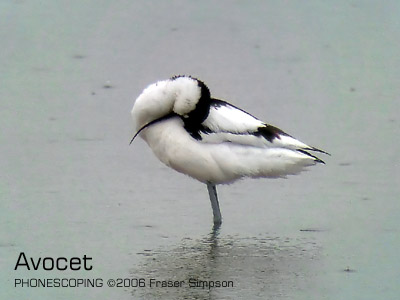
Anyway getting back on track, this weekend I was visiting my sister and brother-in-law in Cambridge and they kindly gave me a lift to Titchwell on the north Norfolk Coast. This is one of the finest RSPS nature reserves in southern England and despite the bad weather we managed to see 77 species from the two main hides without trying too hard. We didn’t even make it to the sea which would have notched up a few more. Nothing too unusual around, apart from the elusive Purple Heron, but Temminck’s Stint, Bearded Reedling, Whimbrel, Spotted Redshank, Little Tern, Cetti’s Warbler, Little Stint, Garganey, and the dozens of Avocets and passage waders made for a great day.

Left my long lens at home so below are a selection of mainly phonescoped images with the Nokia 6280 and Kowa 821. First two are DSLR shots however (the difference in quality is obvious though).

Tuesday, May 02, 2006

Warblers & Trains

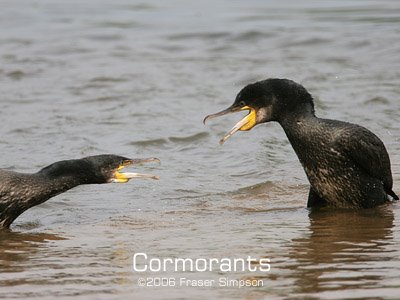
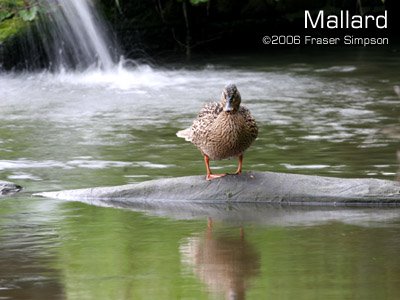
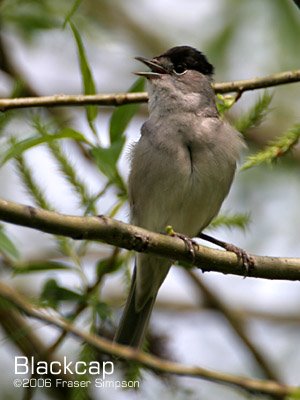
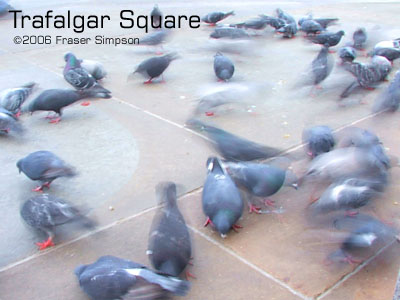
There are weekends, believe or not, when I don’t go birding. Today Lisa and I were doing some touristy things in central London (away from any parks where I might be tempted to check out that LBJ) but, of course, there are even birds here. Peregrine, Cormorant, Mallard, Starling and even that rare central inner city species the House Sparrow were seen around the Tower of London. Many of the Wood Pigeons are edging in on the niche of the ubiquitous Feral Pigeon and some are just as scruffy. But it was a couple of relatively common species that made the day… if only for their extremely unusual choice of location. Firstly, a Sedge Warbler singing from a very small patch of scrub outside Tower Hill Underground station, and secondly, even more bizarre, a Blackcap singing from the busy Hungerford railway bridge spanning the River Thames to Charing Cross station. It continued to sing as the trains rolled in. Urban in the extreme – there is not even any weedy buddleia bushes on the bridge. It seems more than likely that both these warblers were transient passage migrants brought down by the overnight rain. Later in, the now relatively pigeon-less, Trafalgar Square (probably only the second time I’ve been there) a lonely male Mallard was happily swimming around the sterile fountains looking for scraps. This topped off a surreal day of non-birding in the capital.

Find out more about birding in London...
http://myweb.tiscali.co.uk/calidris/
http://website.lineone.net/~andrewself/Londonsbirding.htm

Hobby

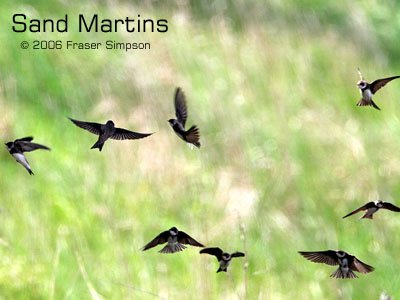
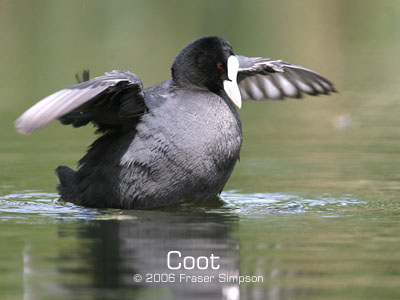
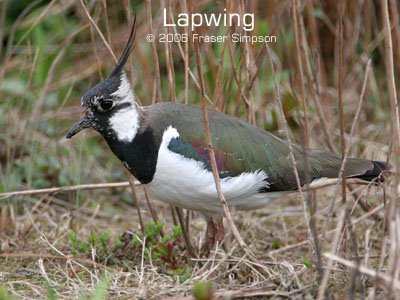
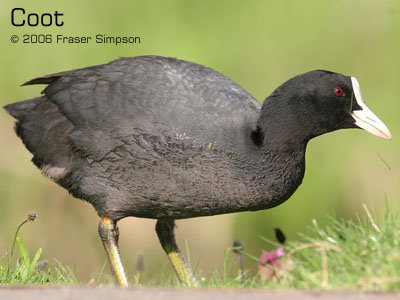
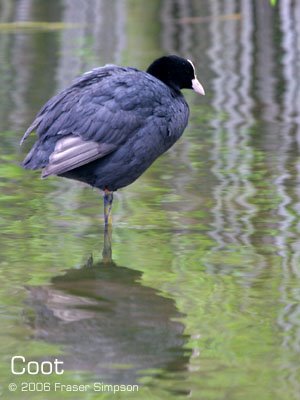
Birding at Barn Elms WWT (London Wetland Centre) reserve produced my first Hobby of the year along with Avocet, Yellow Wagtail, and Reed Warbler, among the many common summer migrants, which have all arrived back in good numbers now. Little Ringed Plover, Redshank and Lapwing appear to be breeding again in good numbers and the first Coot and Moorhen broods are already growing up fast. The introduced Snake’s Head Fritillaries are blooming well. The specially created Sand Martin nesting bank, which can be viewed from the Wader Scrape hide, looks like having a successful season. The many human visitors today meant than few birds were as confiding for photography as they can be on the reserve.

See...
http://www.wwt.org.uk/visit/wetlandcentre/default.asp


Monday, April 24, 2006

King Eider at Irvine, Ayrshire

Having missed the Easter holiday back home in Ayrshire I made a brief visit at the weekend. Luckily the fabulous King Eider (very rare sea duck from the Arctic & Iceland) was still around. Despite having been present for a couple of weeks there were still around 20 birders (mostly from south of the border) on Saturday morning. The bird was showing well but I didn’t want to upset anyone by sneaking out along the rocks with my DLSR kit. High tide on Sunday morning was around 0800h so I arrived at 0700h hoping for the bird all to myself. However, the King must have been having a long lie this morning as he did not show up until after 0900h. It remained distant all morning so a few of us went out along the rocks but some mindless idiots (who incidentally should not have been in the vicinity of the harbour mouth) on jet skis scared the life out of everything in the area and the bird flew out to sea with the small flock of Common Eiders. In the end I only came away with some poor, distant record shots.


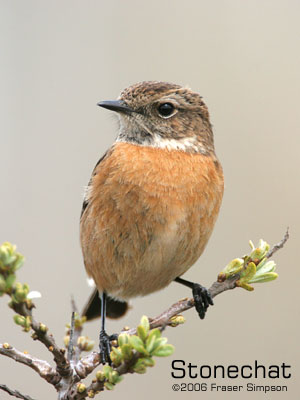
Still, spending several hours on the Firth of Clyde was very refreshing with Gannets, Sandwich Terns, Red-throated Divers, Red-breasted Mergansers and a good passage of White Wagtails. Got many nice shots of the Stonechats in the dunes near Troon and I may use one of them for the cover of the Ayrshire Bird Report 2005 which should be available by early June.

Wednesday, April 19, 2006

Endemic Birds on Tenerife

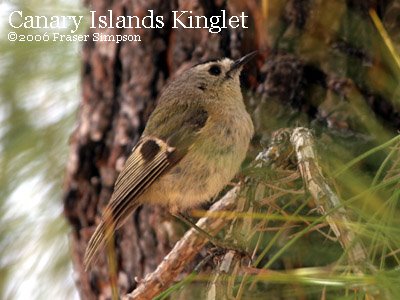
Just returned from a week birding on Tenerife in the Canary Islands. With a list of 54 species this trip was more about quality than quantity and the targets were those birds endemic to the Islas Canarias or Macaronesia (which also includes the Azores, Madeira and Cape Verde Islands). Obviously the Atlantic or Island Canary is the most famous and I found it easy to see over most of the island with the exception of the Euphorbia coastal desert. The Blue Chaffinch is probably the most impressive and is restricted to the Canarian Pine forests of Tenerife and Gran Canaria. The two monteverde pigeons, Bolle’s and Laurel Pigeon, are elusive and mysterious inhabitants of the now rare Laurel forests where the mist rolls in off the Atlantic and makes seeing these birds somewhat difficult. I was exceptionally lucky on my visit to Monte de Agua with over 40 pigeons including a small roost. Others crackers were the Canary Islands Kinglet (is it a Goldcrest or a Firecrest?), Plain Swift, Canary Islands Chiffchaff, Berthelot’s Pipit and the Tenerife Blue Tit.

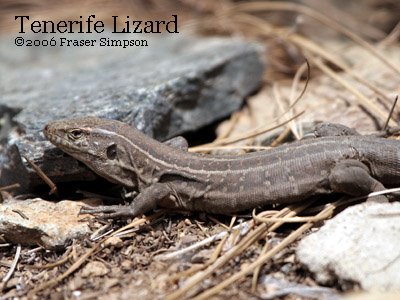
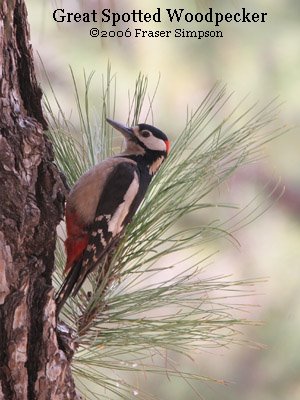
Even the more recognisable birds here are identifiable to some degree as distinct sub-species or island races. The Common Chaffinch really is quite different to birds on the European continent. The Tenerife Robin is a bit more cryptic morphologically but its vocalisation is fairly distinct. The cabrerae race of Blackbird, however, looks pretty much like the garden bird in the British Isles. Other recognised subspecies found through the week included koenigi Southern Grey Shrike, canariensis Great Spotted Woodpecker, canariensis Grey Wagtail, atlantis Yellow-legged Gull, and the canariensis Kestrel, These islands could be described as the Galapagos of Europe and its not just the birds that are fascinating…from the lizards (just two endemic species) to the plants (hundreds of endemics) there is much to keep up the interest when the birding starts to run thin. However, if I’d known how easy it was to see all the special birds within a few days I would have planned the rest of the week around a trip to Fuerteventura to pick up the Fuerteventura Chat, Houbara Bustard and Cream-coloured Courser. There is always next time...


Bald Ibis on the Costa de la Luz

I’ve spent most of the last three weeks in Spanish territory. Firstly, to Zahara de los Atunes in Southern Spain on an ecological genetics field course with work and secondly to Tenerife in the Canary Islands for an endemic clean-up.

Zahara (of the tuna fish) – once the centre of the Almadraba - is situated on a quiet 15 km beach on the Costa de la Luz (Coast of Light) west of the Straits of Gibraltar. This area is one of the last unspoiled stretches of coastline in Spain and the light here is unbelievably intense, although the wind and the sea also dominate the experience here. But there is much more here, especially for the naturalist from northern Europe who will find that spring is in full swing at this time of year. Just east towards Tarifa, thousands of birds are flying across to the European continent from Africa and many can be observed arriving in off the sea near Zahara, particularly when strong winds are blowing from the east.

The area around Zahara is a superb area for birding with Montagu’s Harrier, Calandra Lark, Purple Swamp-Hen, Pallid Swift, Lesser Kestrel and Little Bustard all available. Perhaps the highlight for me is seeing the recently (re)introduced Bald Ibises in the Sierra del Retín. The flock regularly feeds in coastal meadows between Zahara and Barbate. These birds originate from a captive flock in Jerez Zoo and the reintroduction program, Proyecto Eremita, is led by Jose Manuel Lopez Vasquez and run by several organisations including Junta de Andalucia and Zoobotanico de Jerez.

You can read more at www.gonhs.org