Tuesday, August 29, 2006

Walthamstow

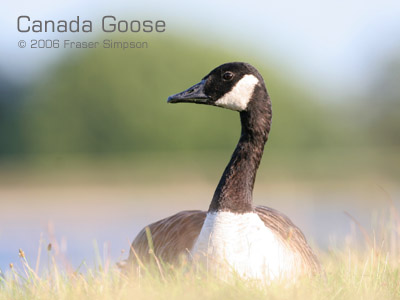
Birding abroad really does spoil you. So much so that I've not had much notion of birding in London since getting back from AZ. Anyway, I went Walthamstow Reservoirs at the weekend but apart from plenty of Migrant Hawkers the best birds were Green Sandpiper and a migrant Yellow Wagtail. My favourite photography spot from the hide is now pretty useless, as some maintenance work has made it very unattractive for anything. Sad to say I resorted to photographing Canada Geese which I know are a real favourite with many birders.

Wednesday, August 16, 2006

Birding Arizona


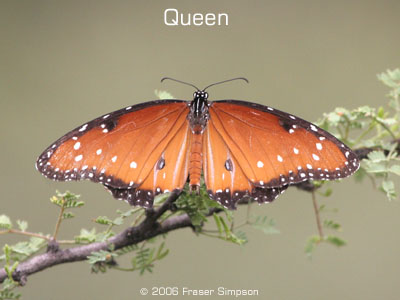
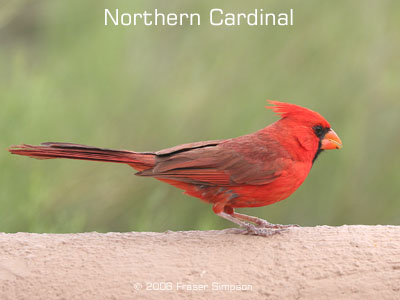
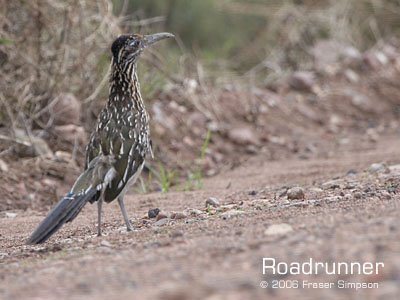
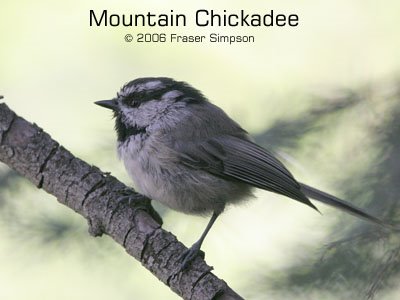
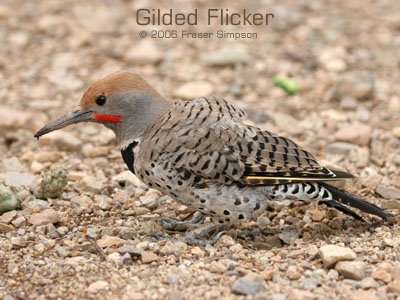
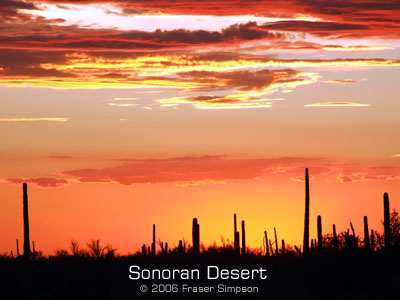
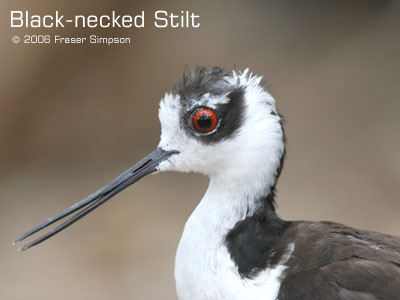
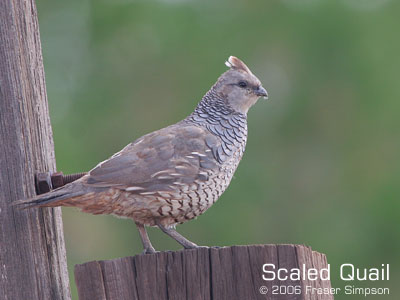
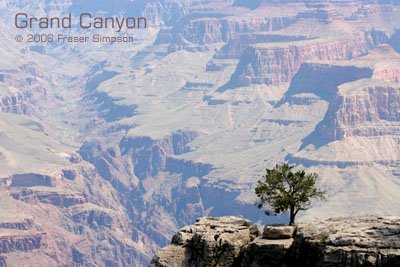
Just returned from a fantastic birding trip to southeast Arizona where I notched up 200 species in 10 days before heading north to relax around the splendid scenery of the Grand Canyon and Monument Valley. This southern US state is not just about deserts and Roadrunners – in fact it is one of the most diverse in terms of numbers and habitats. This was my first proper trip to North America so most species would be of interest (like the gaudy Northern Cardinal) and in particular the Mexican specialities which just creep into the US here such as Mexican Chickadee.

We camped as usual for that back to nature experience when the weather allowed (electrical storms, flash floods, dust storms not withstanding) but regularly stayed in mountain lodges and cabins. I can recommend Santa Rita Lodge in the Santa Rita Mountains and The George Walker House in the Chiricahua Mountains – so much wildlife was observed without even leaving the properties and the hummingbird feeders hung at the windows made it all to easy to just sit and relax.

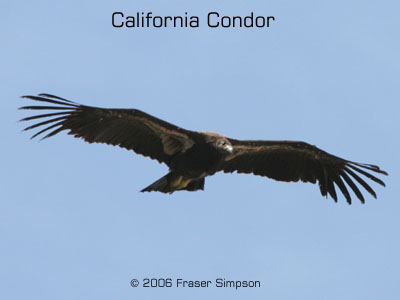
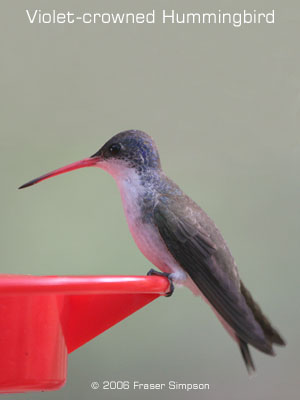
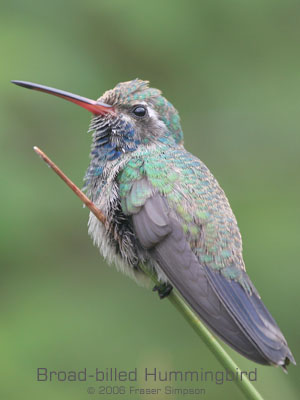
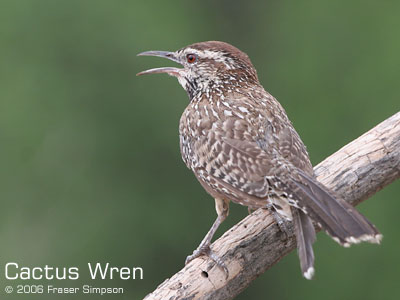
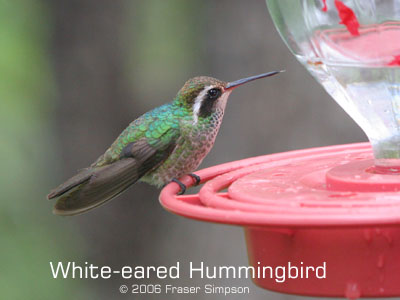
Some of the highlights were Aztec Thrush (a very popular bird attracting many US listers), Elegant Trogon, Arizona Woodpecker, Gray Hawk, Cactus Wren, Painted Redstart, Phainopepla, Crissal Thrasher, California Condor, Black-capped Gnatcatcher, Sulphur-bellied Flycatcher, Varied Bunting, Painted Bunting, and Botteri’s Sparrow. But it was the hummingbirds which really stand out and the ease of observing and identifying them. This is possible due to the dedicated birders who open their gardens (festooned with hummingbird feeders) to the public, allowing comfortable and extended viewing opportunities – none of this brief view in a shady rainforest that I’m more used to. Notable properties we visited for hummers were Santa Rita Lodge, The Paton’s yard in Patagonia, Beatty’s Guest Ranch in the Huachuca Mountains, Portal Peak Lodge in the Chiricahua Mountains, and nearby, George Walker House in the hamlet of Paradise. Best of our 12 species were Magnificent, White-eared, Violet-crowned, Blue-throated, Calliope and Berylline Hummingbirds.

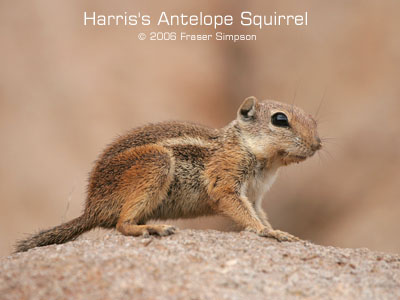
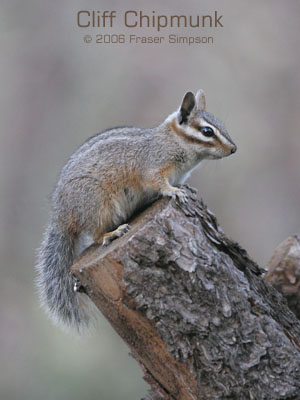
The scenery is a constant distraction and there wasn’t time to focus on the other organisms which continually vie for attention, particularly the reptiles and mammals. We met many birders, for the most part in Madera Canyon, and all were extremely friendly and helpful with local sites, weather conditions and advice. I have many photos to sort through and a fully illustrated trip report will be uploaded to my website within a couple of week at
www.fssbirding.org.uk/trips.htm

Meanwhile, some alternative photographs can be found here

  • Luminous Nature
  • Birding Arizona

    Birding Arizona

    Birding Arizona

    Friday, July 28, 2006

    Desert Bound

    I'm off birding to Arizona. I'll be posting words and photos again from mid-August.
    Thanks for visiting.

    Wednesday, July 26, 2006

    Western Scrub-Jay along the River Ayr

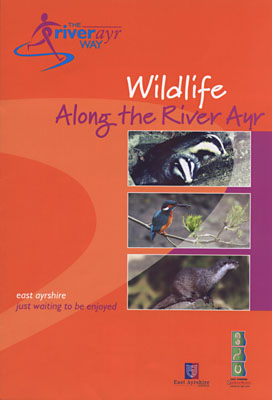
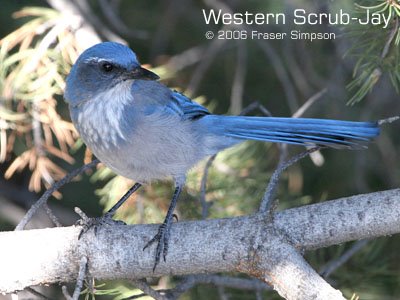
    I’ve just acquired a copy of a rather nice laminated leaflet describing the wildlife to be found along the River Ayr in southwest Scotland. It is produced by the Outdoor Access Unit at East Ayrshire Council and mentions Catrine Voes, East Ayrshire’s first Local Nature Reserve (shock – ground-breaking stuff!). Now, I’ve been along the River Ayr many times but have yet to observe a Western Scrub-Jay (Aphelocoma californica)! Yes, inside is a photograph of this species from the south-western states of the US. In fact, you can even ascribe it to the Pacific race from California. I’m not sure how this Nearctic exotic managed to find its way into the guide but I’m guessing it was inserted by someone googling for 'Jay'. At the foot of the second page is some text instructing the reader that “the welfare of wildlife and its natural habitat must come first and ensure that you leave the environment untouched”. Obviously this does not apply to Moorfield and it’s extirpated Grayling butterflies…

    Monday, July 24, 2006

    Scotch Argus at Changue

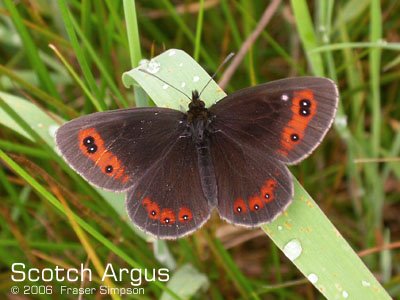
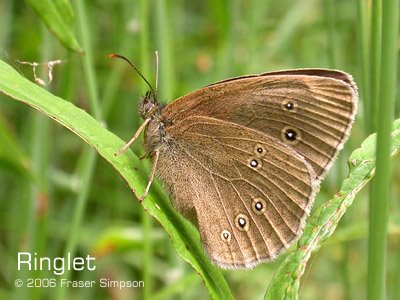
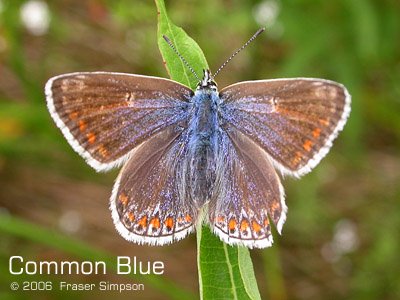
    This weekend I was back in Ayrshire looking for the last two butterfly species of the season to emerge – Purple Hairstreak and Scotch Argus. Kirstie’s Trail through the glen at Changue, near Barr, provided Crossbill, Redpoll, Raven and Buzzard while searching for Scotch Argus. Just five freshly emerged individuals were found. In a week or two there may be hundreds flying in the area. The Fairy Knowe Trail is closed at the moment so we were not able to look for Black Darters along there but Kirstie’s Trail had at least 16 Common Hawkers and two Gold-ringed Dragonflies. Ringlets were fairly abundant along with fewer numbers of Common Blue, Meadow Brown, Green-veined White, Large Skipper, Sexton Beetle, and a Giant Wood Wasp.

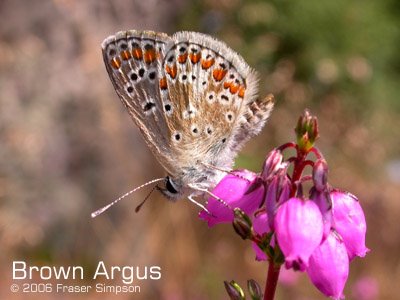
    Pinbain Burn in the Lendalfoot Hills offered 40+ Graylings and at least one Northern Brown Argus was still flying.

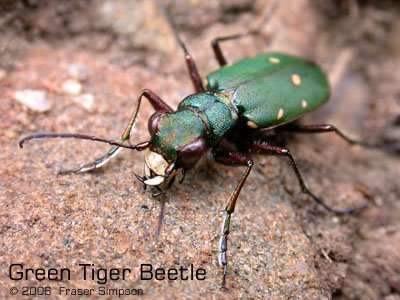
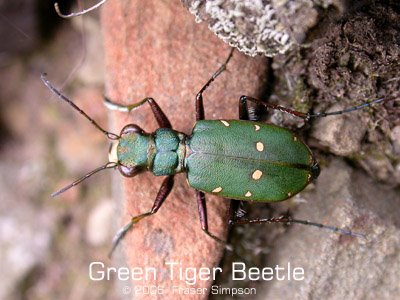
    Down in Currarie Glen, conditions were less than ideal for observing Purple Hairstreaks (hot sun and no wind!). Scanning the low, scrubby oaks on the steep hillside of Shallochwreck Burn found no perched hairstreaks in the fairly strong wind. Then, during a brief period of direct sunlight, I watched with the naked eye for some to fly and almost immediately one zipped down hill and landed on the nearest oak, allowing nice views through the optics. A walk down to Currarie Port and around Donald Bowie resulted in 62 Graylings, two Painted Ladies, a single Dark Green Fritillary and a number of Green Tiger Beetles.

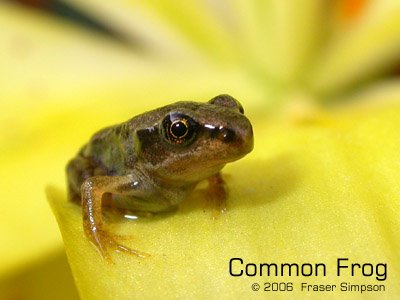
    Back home on the edge of Kilmarnock, an Oystercatcher flew over the busy Irvine Road to Annandale Golf Course. Hanging from it’s bill was a long worm. This bird was nesting in the area last year as almost the same sight greeted me while driving in the opposite direction, almost a year to the date. Back in the garden, froglets have emerged from the water. For more photographs of these, have a look at my other (wordless) blog: http://luminousnature.blogspot.com/


    Saturday, July 22, 2006

    (No) Graylings at Moorfield

    Made a quick visit this evening to the inland Grayling butterfly colony at Moorfield, on the edge of Kilmarnock. This species is almost entirely restricted to the coast in Scotland, so it is quite special to find these butterflies inland. For years, several hundred of these insects emerged each July and August on the post-industrial acid-heath at Moorfield which they shared with Small Heath, Common Blue, orchids, Meadow Pipit, Yellowhammer, Skylark and Grey Partridge to name a few. On Saturday there were no Graylings. In fact there was no anything. This site was destroyed last year by a partnership between East Ayrshire Council (their next move is to destroy enough of Kay Park for a 100 space car park!) and Land Improvement Holdings. They felt it necessary to cap the old bing with a clay covering, thereby obliterating this unique local habitat. This won’t surprise residents of Kilmarnock though – they only have to walk through the soulless, disaster that is the town centre to see that the local authority has little interest in preserving anything, be it natural or man-made. None of the local and national conservation organisations appeared to care, and, worse still, even knew about it despite recording and monitoring at the site. Most people driving by would never realise they were passing a local wildlife treasure. Now they never will.

    Friday, July 21, 2006

    Arson catastrophe for Thursley Heath

    Just heard the devastating news that Thursley Heath/Common NNR has been completely destroyed by the recent fire. I knew it had been bad but not this bad. The heartbreaking thing is that this appears to have resulted from a selfish act of environmental vandalism with a “52-year-old, from Thursley questioned on suspicion of arson after being arrested” (from the BBC). I imagine that it could take at least a decade for the habitat to recover. Whoever is responsible for this should be made to do backbreaking, unpaid conservation work for the rest of their shameful existence (preferably while being birched!).

    See the following links for the news.
    BBC
    http://news.bbc.co.uk/1/hi/england/southern_counties/5184582.stm
    English Nature
    http://www.english-nature.org.uk/news/story.asp?ID=811

    Monday, July 17, 2006

    Thursley Heath Dragonfly Safari

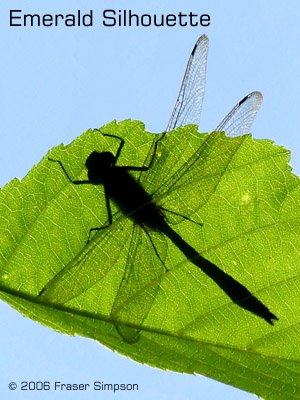
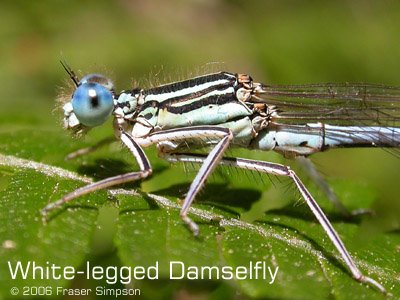
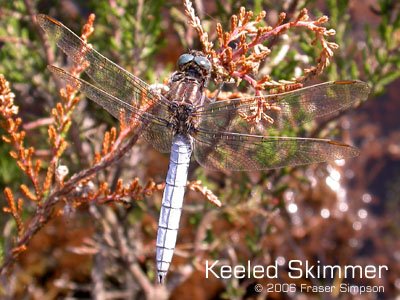
    Took the train yesterday from London Waterloo to Milford in Surrey and walked the few miles to Thursley National Nature Reserve with the intention of seeing the Brilliant Emerald dragonfly. This species has a disjunct distribution in the British Isles with populations only in a restricted area of the Scottish Highlands and the south-east of England. The acid heathland of Thursley, together with the bogs pools and surrounding birch, oak, pine woodland and other lakes is well known for its dragonfly diversity and the fine weekend weather made for a fantastic trip. I visited Hammer Pond, Forked Pond, Pudmore Pond, The Moat as well as some of the streams and bog pools in the area and found 21 species! Yet, with all this food source, I didn’t see a single Hobby.

    Beautiful Demoiselle Calopteryx virgo
    Banded Demoiselle Calopteryx splendens
    Emerald Damselfly Lestes sponsa
    White-legged Damselfly Platycnemis pennipes
    Large Red Damselfly Pyrrhosoma nymphula
    Small Red Damselfly Ceriagrion tenellum
    Azure Damselfly Coenagrion puella
    Common Blue Damselfly Enallagma cyathigerum
    Blue-tailed Damselfly Ischnura elegans
    Red-eyed Damselfly Erythromma najas
    Small Red-eyed Damselfly Erythromma viridulum
    Southern Hawker Aeshna cyanea
    Brown Hawker Aeshna grandis
    Emperor Dragonfly Anax imperator
    Downy Emerald Cordulia aena
    Brilliant Emerald Somatochlora metallica
    Four-spotted Chaser Libellula quadrimaculata
    Black-tailed Skimmer Orthetrum cancellatum
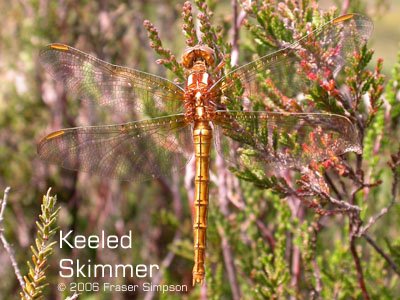
    Keeled Skimmer Orthetrum coerulescens
    Common Darter Sympetrum striolatum
    Black Darter Sympetrum danae

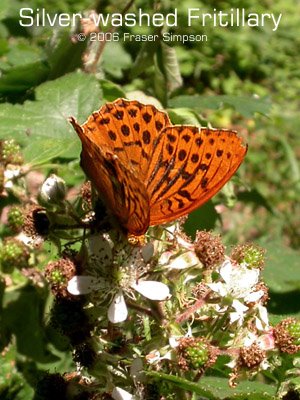
    The area is pretty rich in other quality wildlife and when not observing dragons I found at least 11 Silver-washed Fritillaries, White Admiral, Silver-studded Blue, Grayling, Dartford Warbler, Woodlark, Tree Pipit, Crossbill and a couple of Green Sandpipers. The heathland is very dry at the moment and the local fire fighters were controlling areas of burning heather. One of the boardwalks, which I guess is meant to cross some wet bog (but was completely charred), was damaged by the fire and I saw none of the Common Lizards which are regularly seen basking here. The high temperatures meant that insects were very active and most would not rest long to be photographed.