I've uploaded a trip report with sound recordings for my recent visit to Maine on the main website at: www.fssbirding.org.uk/maine2014trip.htm
Friday, August 22, 2014
Friday, August 08, 2014
Kindrogan, Perthshire
I've uploaded a trip report from my annual field course trip to Kindrogan in Perthshire. This year the Green Woodpeckers remained, with likely a second pair nearby, and Goshawk was observed again. Other highlights included Goosander, Golden Eagle, Woodcock, Tree Pipit, Dipper, Redstart, Ring Ouzel, Wood Warbler, Pied Flycatcher and Common Crossbill.
www.fssbirding.org.uk/kindrogantrip2014.htm
Curlew Numenius arquata
Glen Brerachan, Perthshire, Scotland 56° 44' 40.5" N 03° 38' 25.5" W 12 June 2012
Bubbling song uttered during display flight over heather moorland, with two birds from 20 secs.
Tree Pipit Anthus trivialis
Kindrogan Field Centre, Perthshire, Scotland 56° 44' 45.8" N 03° 32' 49.7" W 11 June 2014
Perched song composed of a series of slow trills, the main phrase gradually decreasing in frequency. Flight song during parachuting display composed of a more complicated series of slow and rapid trills and more musical slurred elements delivered in discrete phrases. Note the distinctive down-slurred element from 8.1 to 5.7 kHz between 77.1 and 77.9 secs. Singing from a regenerating clear-fell area of Sitka Spruce in Kindrogan Hill.
Goosander Mergus merganser
Glen Brerachan, Perthshire, Scotland 56° 45' 21.5" N 03° 36' 32.9" W 12 June 2014
Calls from a female in flight, circling potential breeding area.
Wood Warbler Phylloscopus sibilatrix
Kindrogan, Perthshire, Scotland 56° 45' 08.3" N 03° 33' 56.7" W 11 June 2014
Two song types: more common trill (84% of songs in this bird), and less common tew-tew-tew (16%). Common song composed of distinctive accelerating trill, starting with hesitant elements (countable by ear), gradually decreasing in frequency to a rapid finish (uncountable to the ear). Second song type composed of musical, downslurred elements (at 28 secs in this recording). Singing from tree-fall area in a spruce plantation bordering sycamore/beech trees.
Friday, July 04, 2014
Loon Song
Last month I was in the state of Maine, birding the rich forests and sound recording wood-warblers, thrushes, and loons. Depending on which side of the pond you're on, the Common Loon or Great Northern Diver (Gavia immer) has vocalisations often described as haunting, evocative, even eerie. Its always been one of my favourite sounds in nature though until now I had never had the opportunity to hear it in the wild. On this trip I heard them calling from my tent at night and I can certainly attest to the previous adjectives!
Kidney Pond, Baxter State Park, Maine, USA 45° 53' 34.8" N 69° 02' 52.5" W 26 June 2014
Wail from a single bird [File name: commonloonLS112810e]
Getting a nice recording was difficult because from the lake shores I encountered a nocturnal chorus from American Bullfrogs (Lithobates catesbeianus) which by comparison to the beautiful vocals of the loon, is just horrible to my ears. Below is the best I could get with a pair duetting with wails then tremelos.
Fans of electronic music will remember the classic loon sample in 808 State's track Pacific State.
Kidney Pond, Baxter State Park, Maine, USA 45° 53' 34.8" N 69° 02' 52.5" W 26 June 2014
Wail from a single bird [File name: commonloonLS112810e]
Getting a nice recording was difficult because from the lake shores I encountered a nocturnal chorus from American Bullfrogs (Lithobates catesbeianus) which by comparison to the beautiful vocals of the loon, is just horrible to my ears. Below is the best I could get with a pair duetting with wails then tremelos.
![]() |
| Wails from single Common Loon, Webb Lake, Maine, US. |
![]() |
| Wails from a pair of Common Loons, Webb Lake, Maine, US. |
![]() |
| Tremelo duet from Common Loons, Webb Lake, Maine, US. |
Monday, April 07, 2014
Mediterranean Chameleon
I'm in southwest Spain. Today, after 11 field trips to the Costa de la Luz, I finally found a Mediterranean Chameleon (Chamaeleo chamaeleon) - better than any bird today!
Friday, March 14, 2014
Black-crowned Tchagra song, Morocco (part 2)
For part 1 of this blog on the Tchagra, see here. Last week I was lucky enough to capture a pair of Black-crowned Tchagras (Tchagra senegalus) duetting in Morocco. The male is uttering the musical, flutey whistles followed by the rapid, higher-pitched buzzy rattles (highlighted in red). The female immediately joins in with rapidly descending rattling/churring, followed by slower, discontinuous, nasal churring (highlighted in green).
Further north in the Zaer cork region near Rabat, I recorded a more distant male initially singing bouts of perched song phrases before taking to its aerial display flight. In the recording below, you can hear a non-vocal signal between 0.8 and 2.6 seconds as it takes flight. This is known as 'wing-fripping'.
![]() |
| Track in the Oued Massa flood plain, Morocco, 9 March 2014 |
![]() |
| Duetting song uttered from a pair in a Tamarisk in the flood plain of the Oued Massa |
Further north in the Zaer cork region near Rabat, I recorded a more distant male initially singing bouts of perched song phrases before taking to its aerial display flight. In the recording below, you can hear a non-vocal signal between 0.8 and 2.6 seconds as it takes flight. This is known as 'wing-fripping'.
![]() |
| 17 Km north of Sidi Betache, Morocco, 7 March 2014 |
| Song phrases uttered from a male in flight -listen carefully between 0.8 and 2.6 secs for 'wing-fripping'. |
Wednesday, March 12, 2014
Black-crowned Tchagra song, Morocco (part1)
Since my first trips to Morocco in 2007 and 2011 (High Atlas and the south-eastern desert area), I've wanted to return and do a trip down the west coast. This time I went from Larache in the north down to the Oued Massa south of Agadir. My main targets were African Marsh Owl (Asio capensis), Double-spurred Francolin (Pternistis bicalcaratus), Plain Martin (Riparia paludicola) and Black-crowned Tchagra (Tchagra senegalus) - all seen.
In particular I wanted to get some sound recordings of the melancholic, lilting, Tchagra song - one of the most beautiful bird sounds in North Africa. Most days were quite windy and most of the day at the Oued Massa was too windy for recording. Luckily I found a Tchagra singing right beside a track in a sheltered area and I used the car door as extra shelter - like a giant misshaped parabola!
The Black-crowned Tchagra appears to have several song types. The first one I recorded below in the Sidi Betache area is a longer and faster type. Presumably this is from an advertising male. Later I will post a snippet of this bird in aerial display flight,
The second type I recorded from the Oued Massa was shorter and slower and is from a paired bird. This song possibly may have more to do with male-female communication as its mate was observed close by. Later I will post a recording of a duet when the female joined it in the same tree.
In particular I wanted to get some sound recordings of the melancholic, lilting, Tchagra song - one of the most beautiful bird sounds in North Africa. Most days were quite windy and most of the day at the Oued Massa was too windy for recording. Luckily I found a Tchagra singing right beside a track in a sheltered area and I used the car door as extra shelter - like a giant misshaped parabola!
The Black-crowned Tchagra appears to have several song types. The first one I recorded below in the Sidi Betache area is a longer and faster type. Presumably this is from an advertising male. Later I will post a snippet of this bird in aerial display flight,
![]() |
| 17 Km north of Sidi Betache, Morocco, 7 March 2014 |
The second type I recorded from the Oued Massa was shorter and slower and is from a paired bird. This song possibly may have more to do with male-female communication as its mate was observed close by. Later I will post a recording of a duet when the female joined it in the same tree.
![]() |
| Track in the Oued Massa flood plain, Morocco, 9 March 2014 |
Thursday, February 27, 2014
The Amazon? No, West London
Ring-necked or Rose-ringed Parakeets (Psittacula krameri) flying to a roost site in west London, 1/5 second exposure while panning.
Thursday, February 20, 2014
Dockland Shelducks
In East London, within sight of the Millennium Dome and close to UK's tallest buildings, you can find these Common Shelducks (Tadorna tadorna) sifting through the mud.
More to come at:
No image on this blog or related sites may be used, copied, or re-posted without permission or payment
Wednesday, February 19, 2014
Gulls, gulls, gulls
From general observation there seems to more Black-headed Gulls (Chroicocephalus ridibundus) wintering in London at the moment. I haven't made regular counts of this species at the sites I frequent so it may just be that I'm looking for the wider image!
More to come at:
No image on this blog or related sites may be used, copied, or re-posted without permission or payment
Tuesday, February 18, 2014
Windhover Alighting
Wednesday, February 12, 2014
Heron maneuvers in the wind
This juvenile Grey Heron (Ardea cinerea) was photographed in the Docklands of East London. Flying over at a fair height, it suddenly decided to rapidly descend to the water, while having to contend the strong winds. I've cropped these for blogger but are really best seen large and uncropped with the heron dropping in a open sky.
Tuesday, February 11, 2014
Smew on a London boating pond
Friday, February 07, 2014
Turnstones
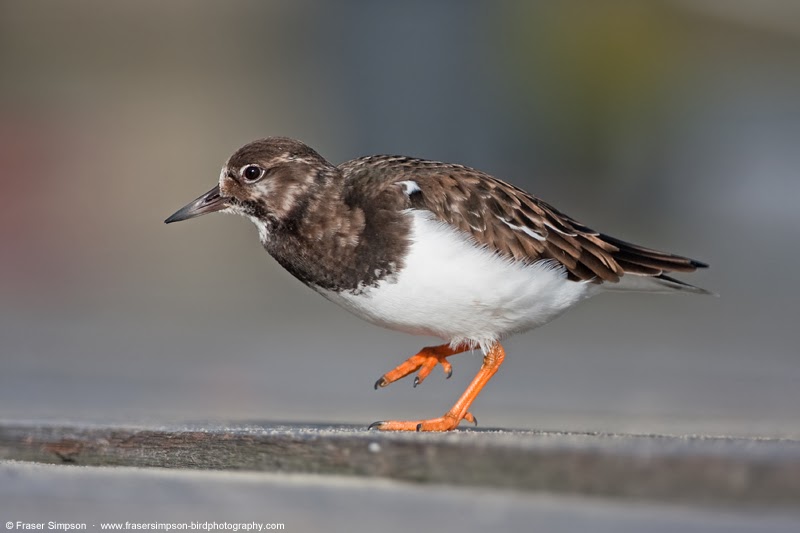
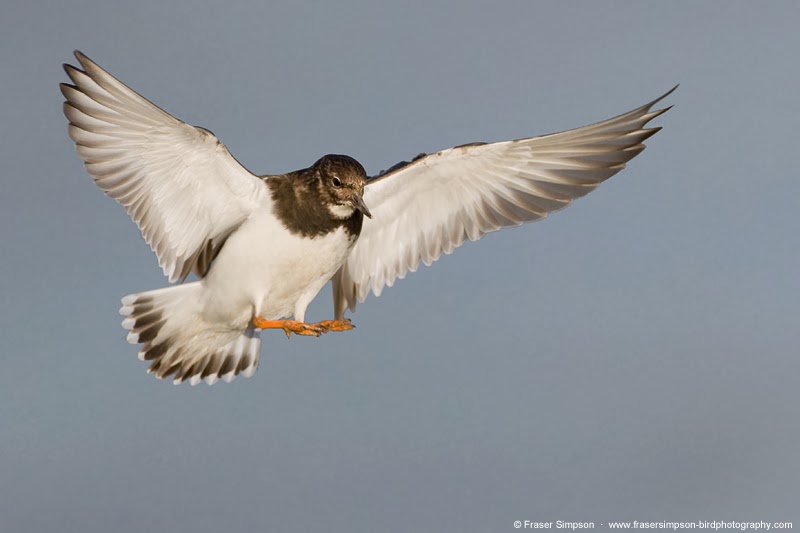
Last weekend saw some respite from the gloomy winter weather so I headed out with Lisa to Essex to try some new subjects. I photographed these Ruddy Turnstones (Arenaria interpres) with both a 24-105mm and 500mm lens. In the coming months I'll definitely return to this site. Getting out of London on public transport can be a pain but worth the hassle for a subject change like this.
More to come at:
No image on this blog or related sites may be used, copied, or re-posted without permission or payment
Wednesday, January 29, 2014
The Mallard
Not much was happening on my last photographic outing. When this happens I tend to experiment a bit. So, using shutters speeds between 1/10 and 1/25 of a second, handheld, I attempted to make some Mallards look more interesting.
Subscribe to:
Posts (Atom)